Project_ Municipal Government Headquarters of the City of San Francisco
Year_ 2025
Location_ Córdoba, Argentina
Team_ Silo Arquitectes + Arco Arquitectura + SMA + Monje Rocio
Type_ National ideas competition, public institution
Client_ Municipality of San Francisco
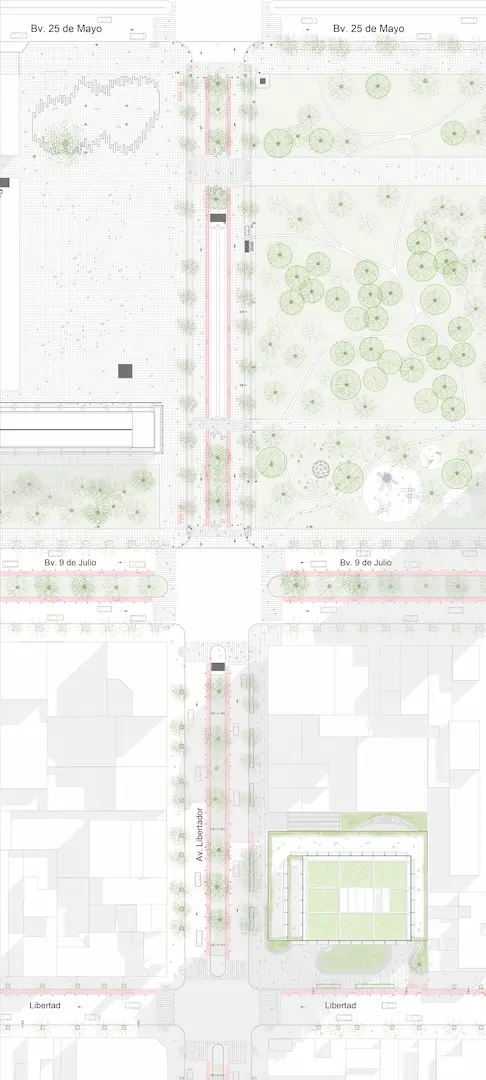
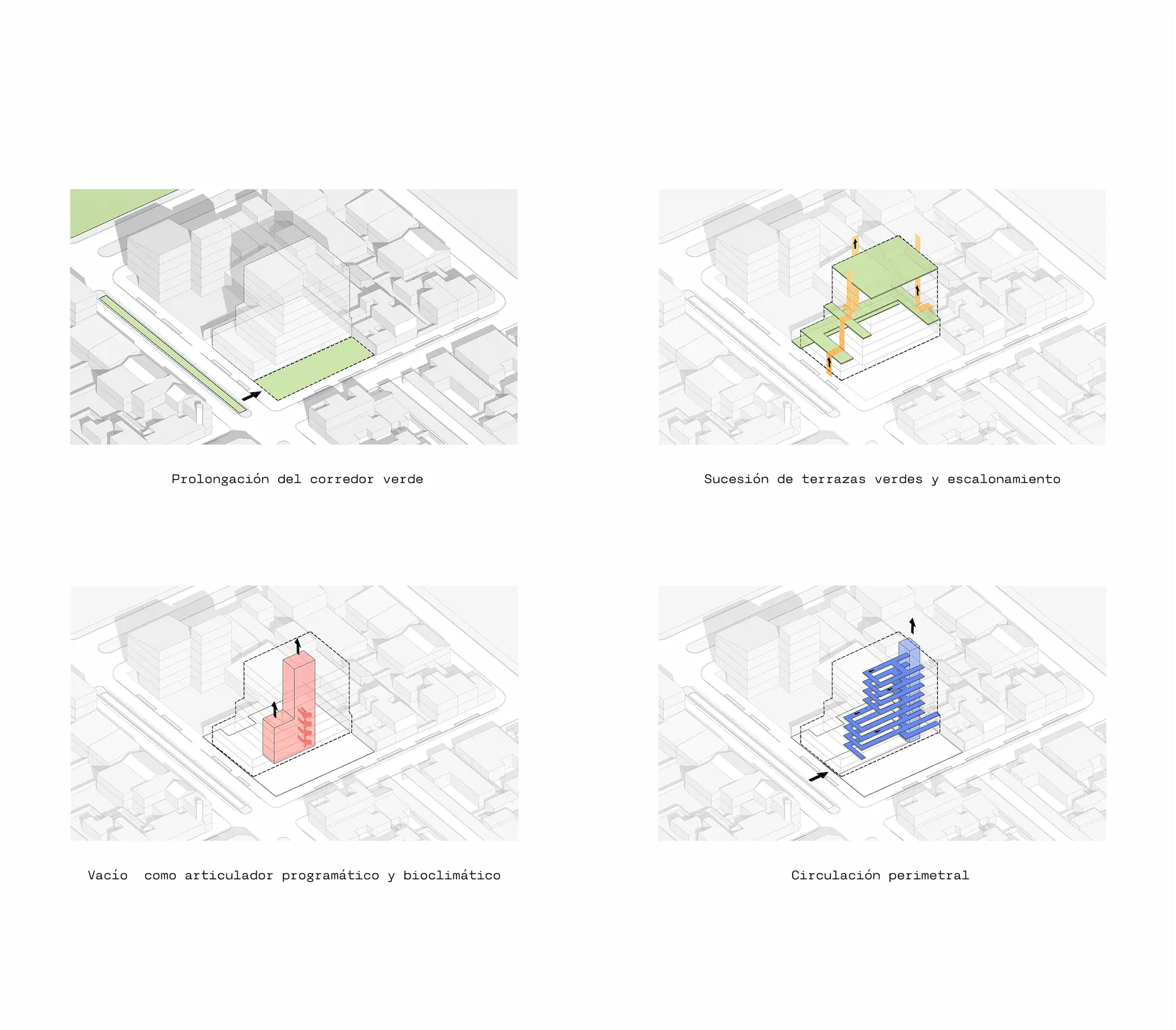
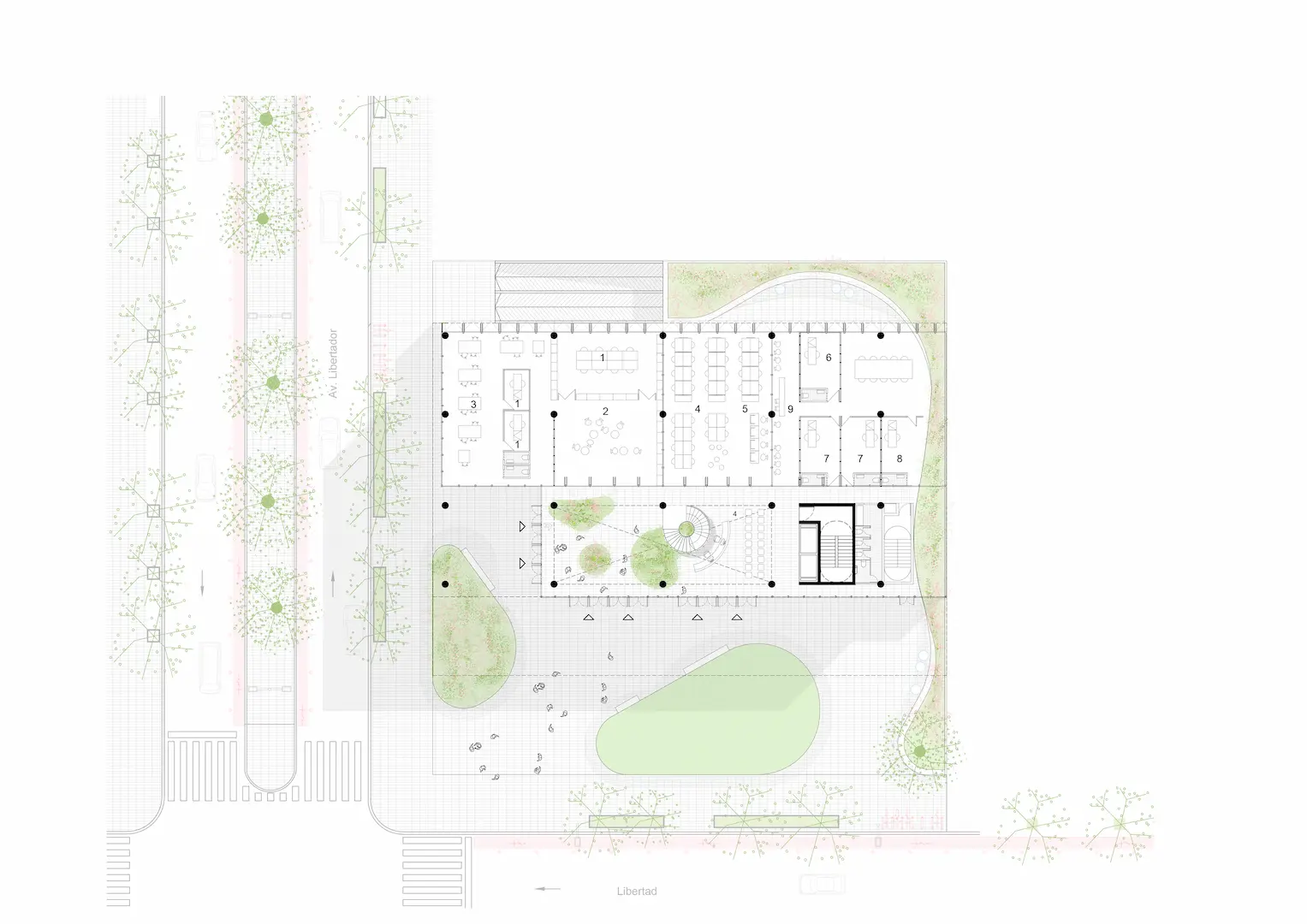
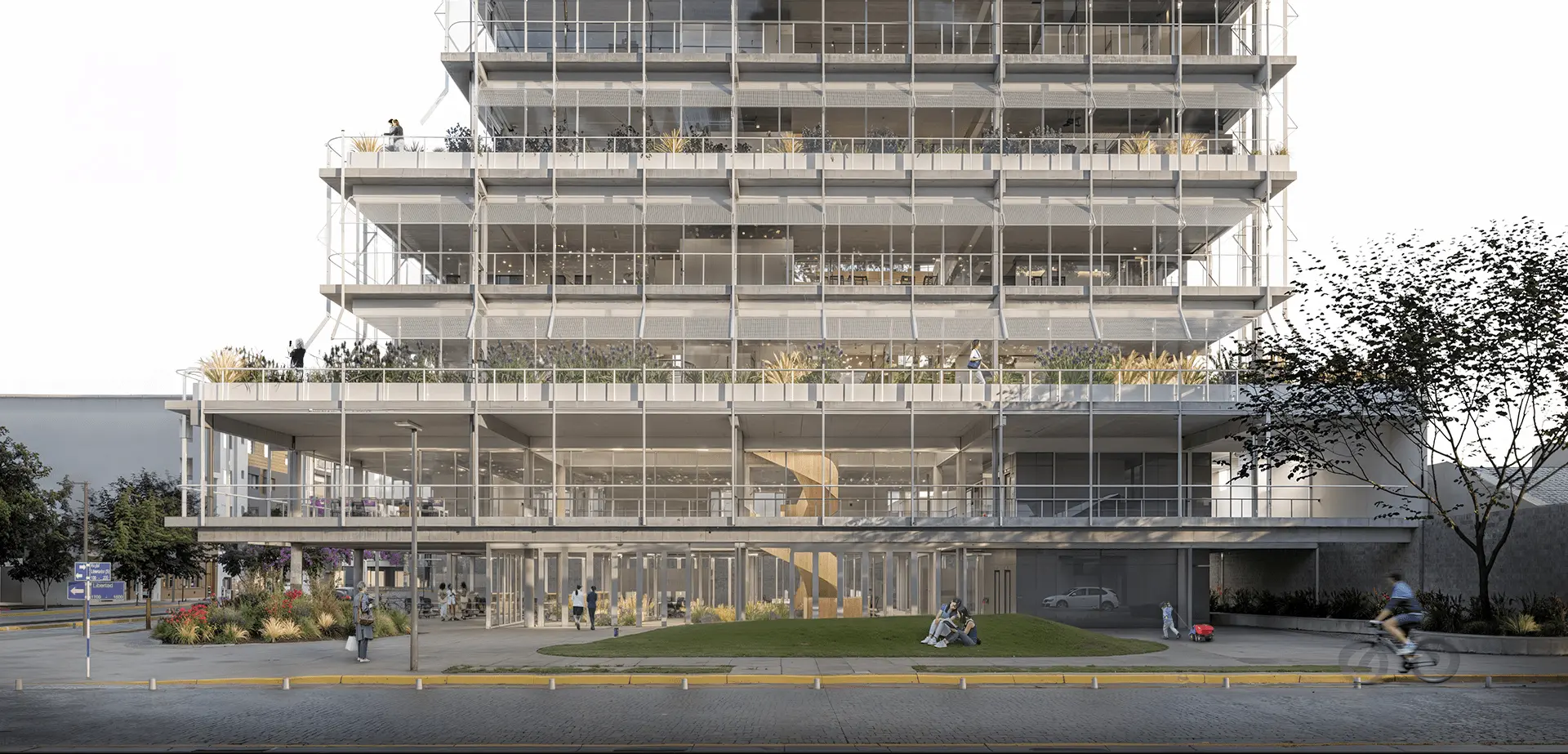
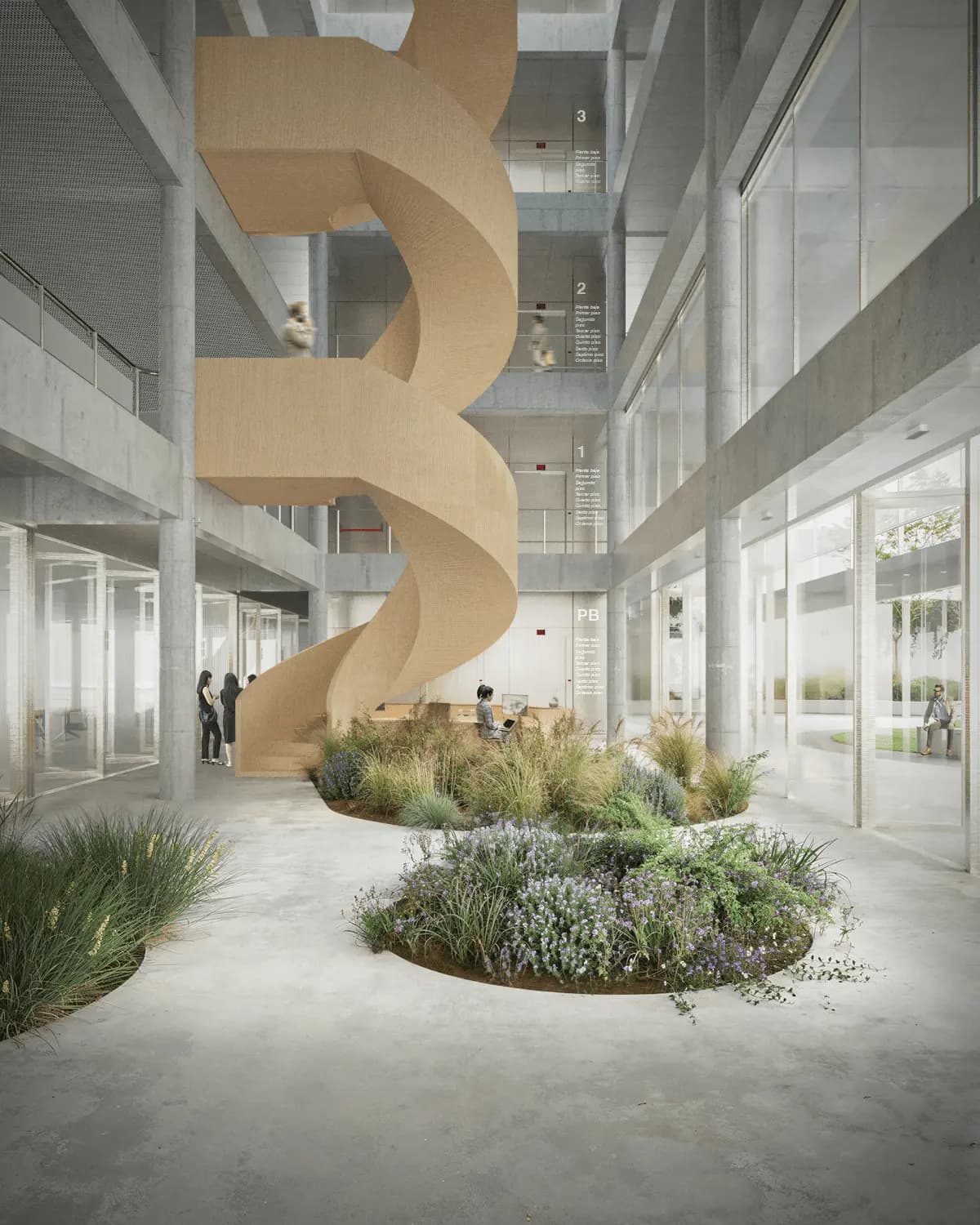
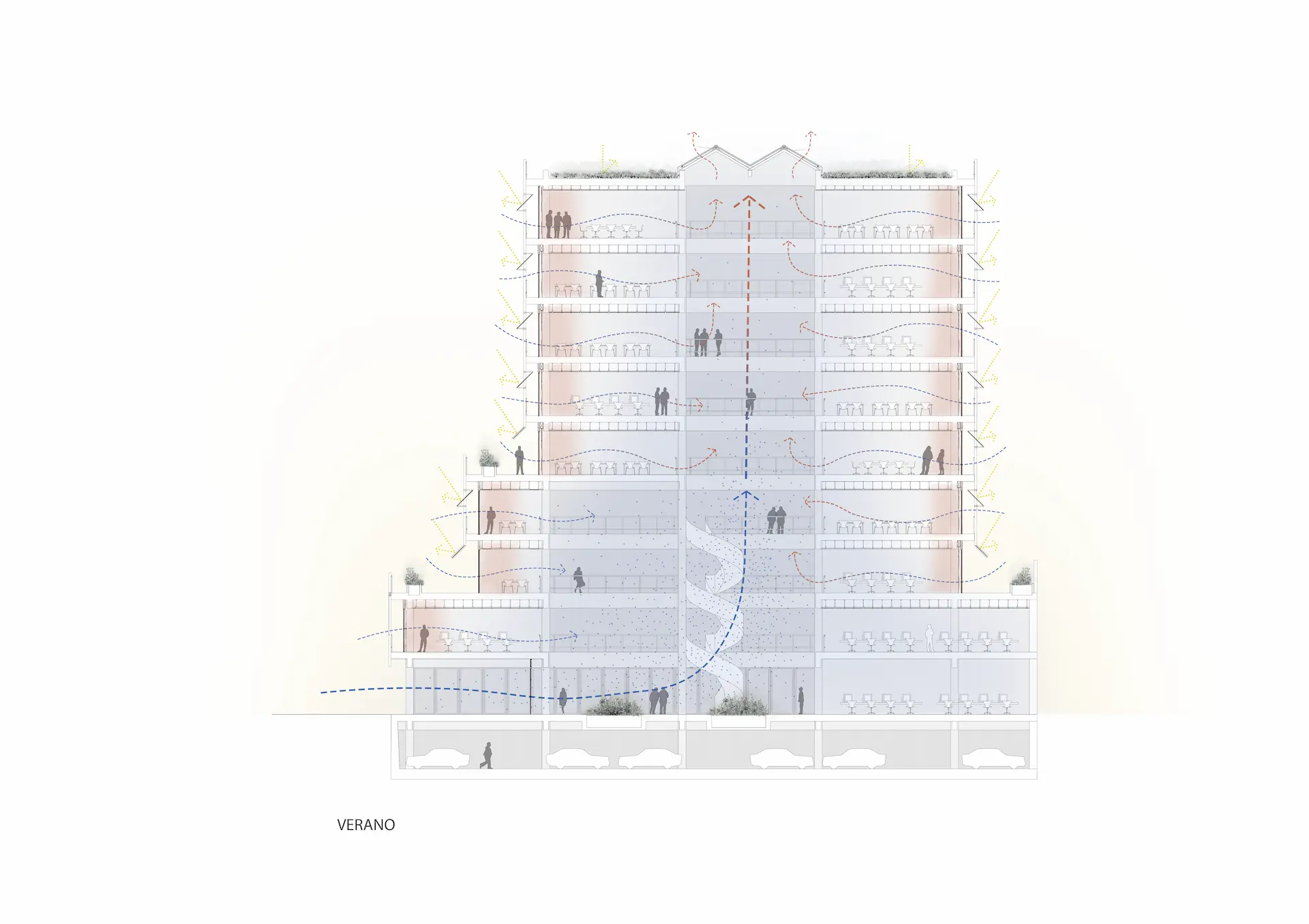
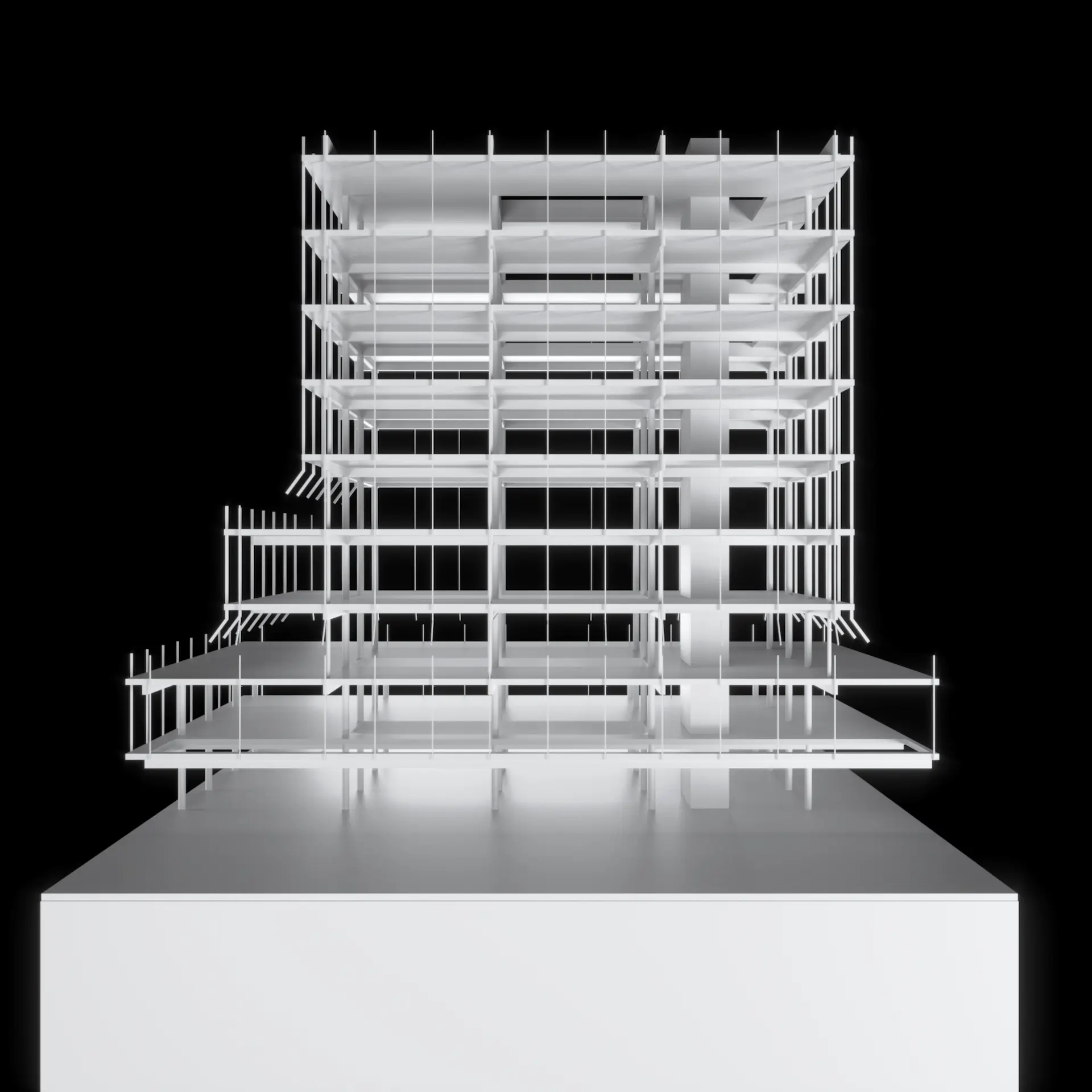
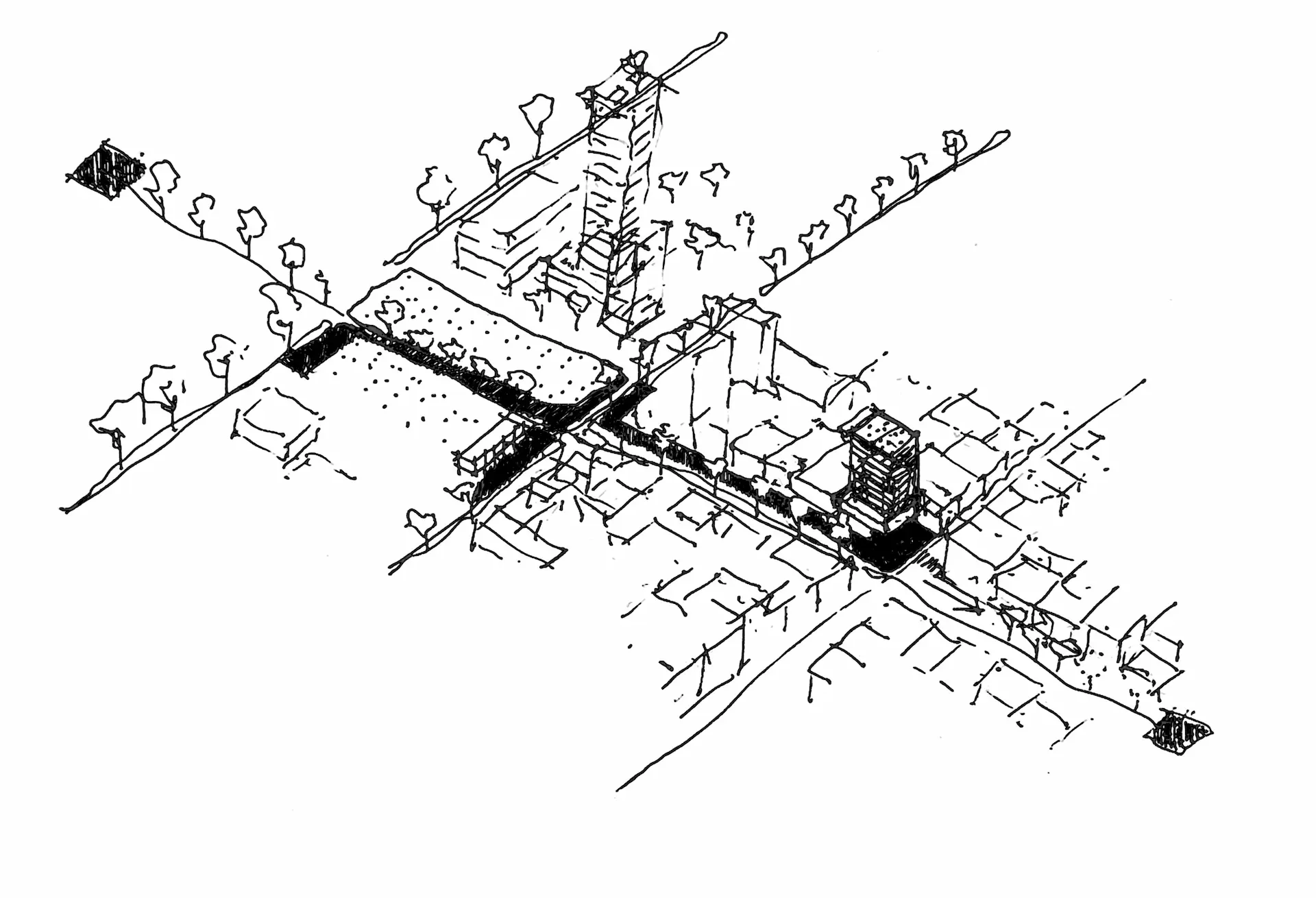
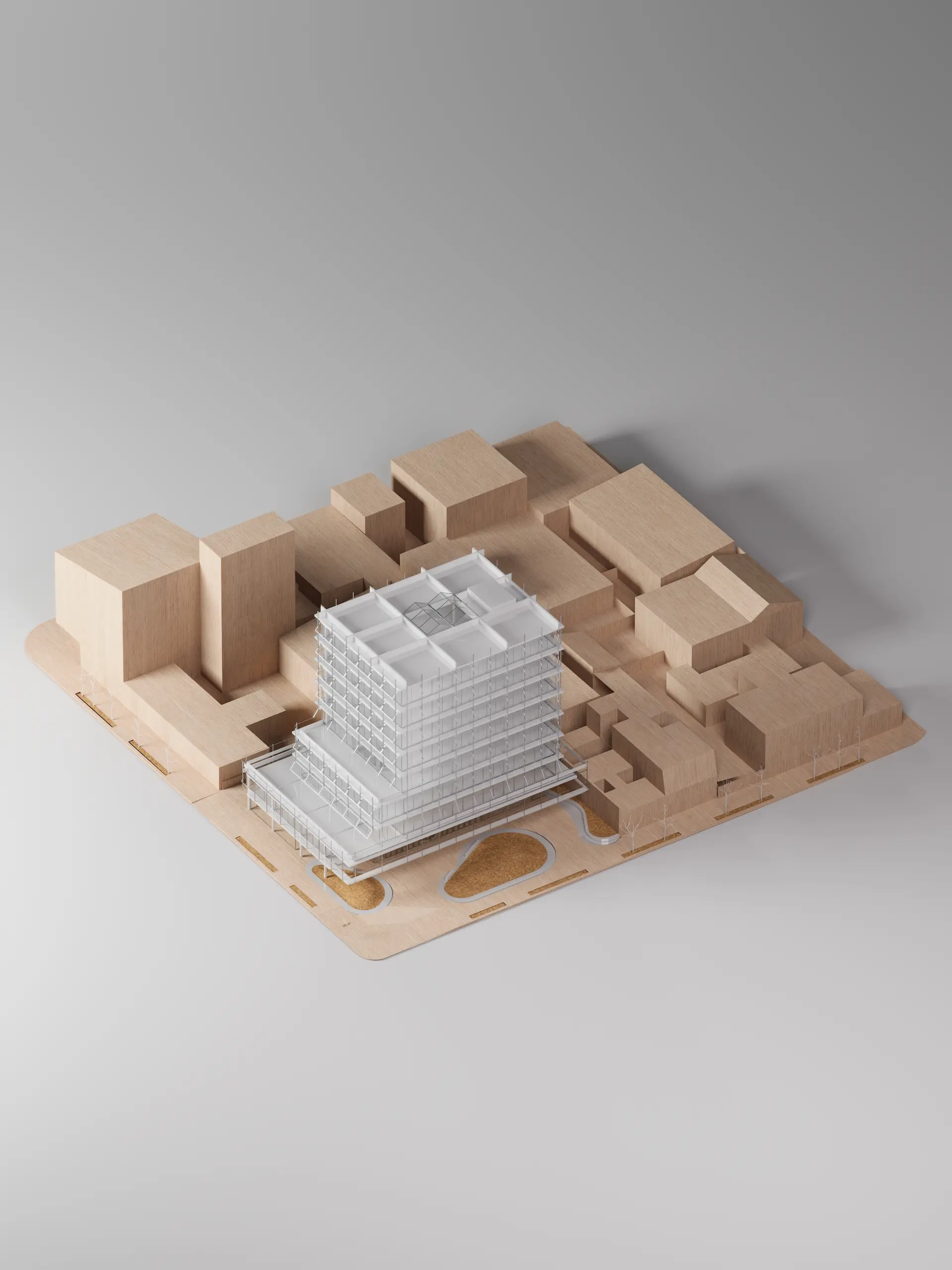
The project for the new public management building in San Francisco arises from a fundamental premise: architecture as social infrastructure. The design is based on integration into the urban fabric by extending the pre-existing green corridor into the plot. This operation creates a lateral public plaza that acts as a civic buffer, enhancing the urban space and mitigating the region's harsh climate through permeable surfaces and native vegetation.
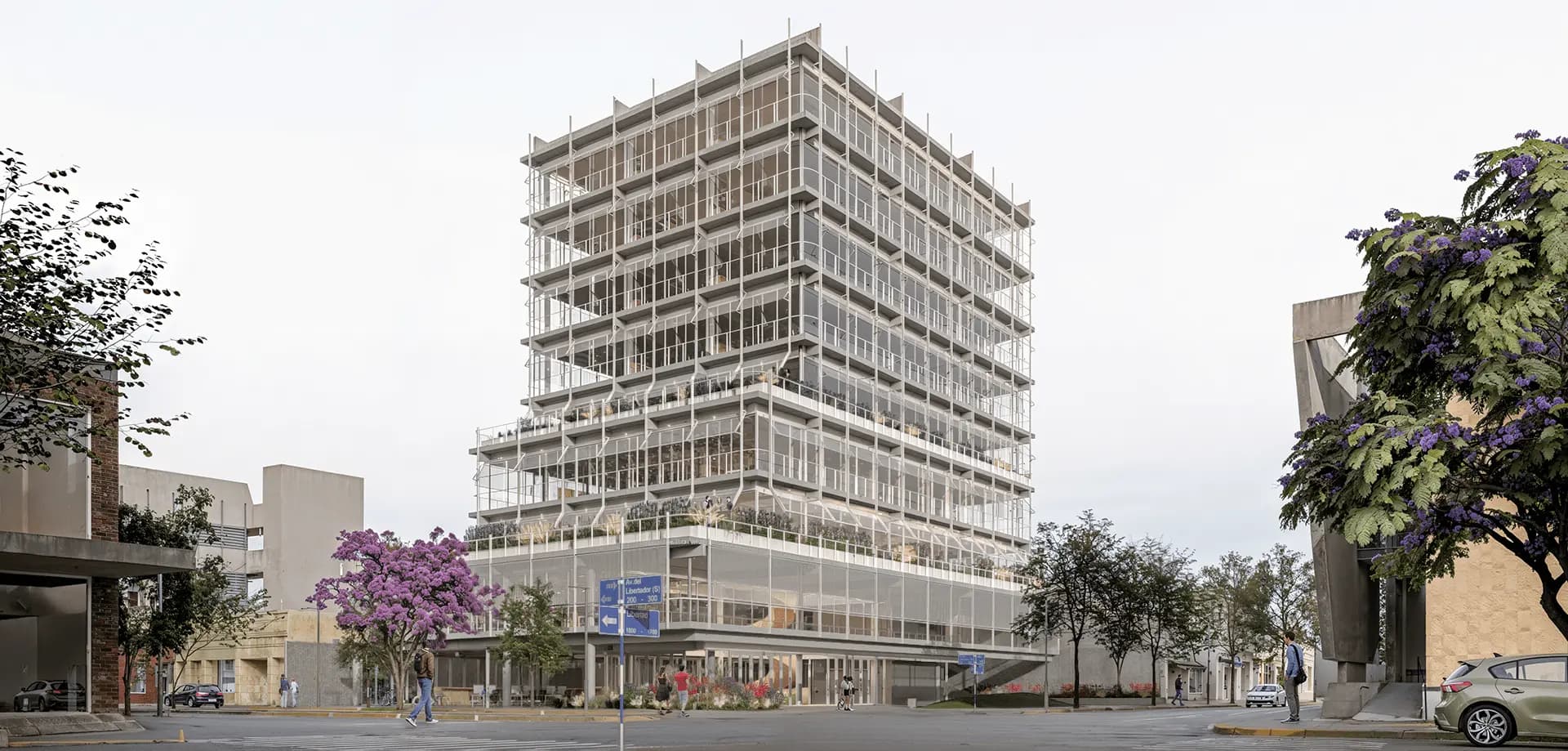
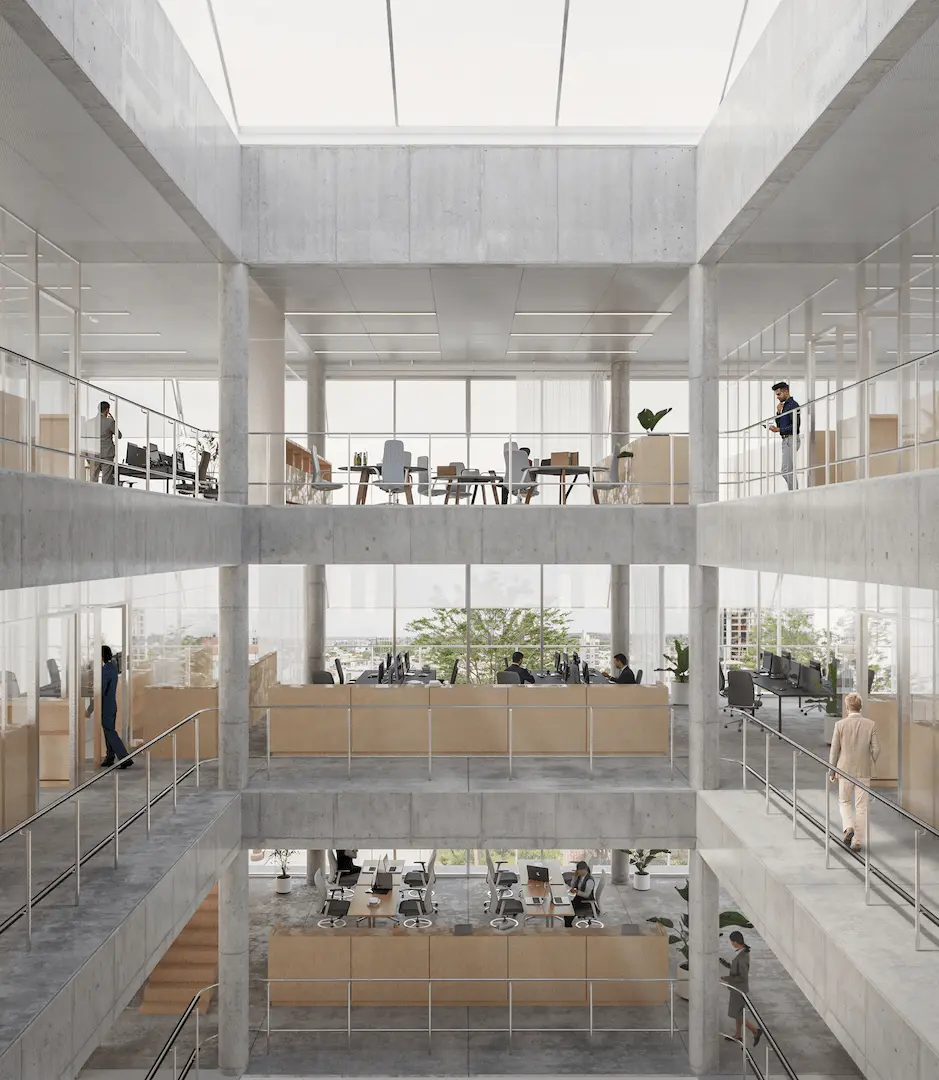
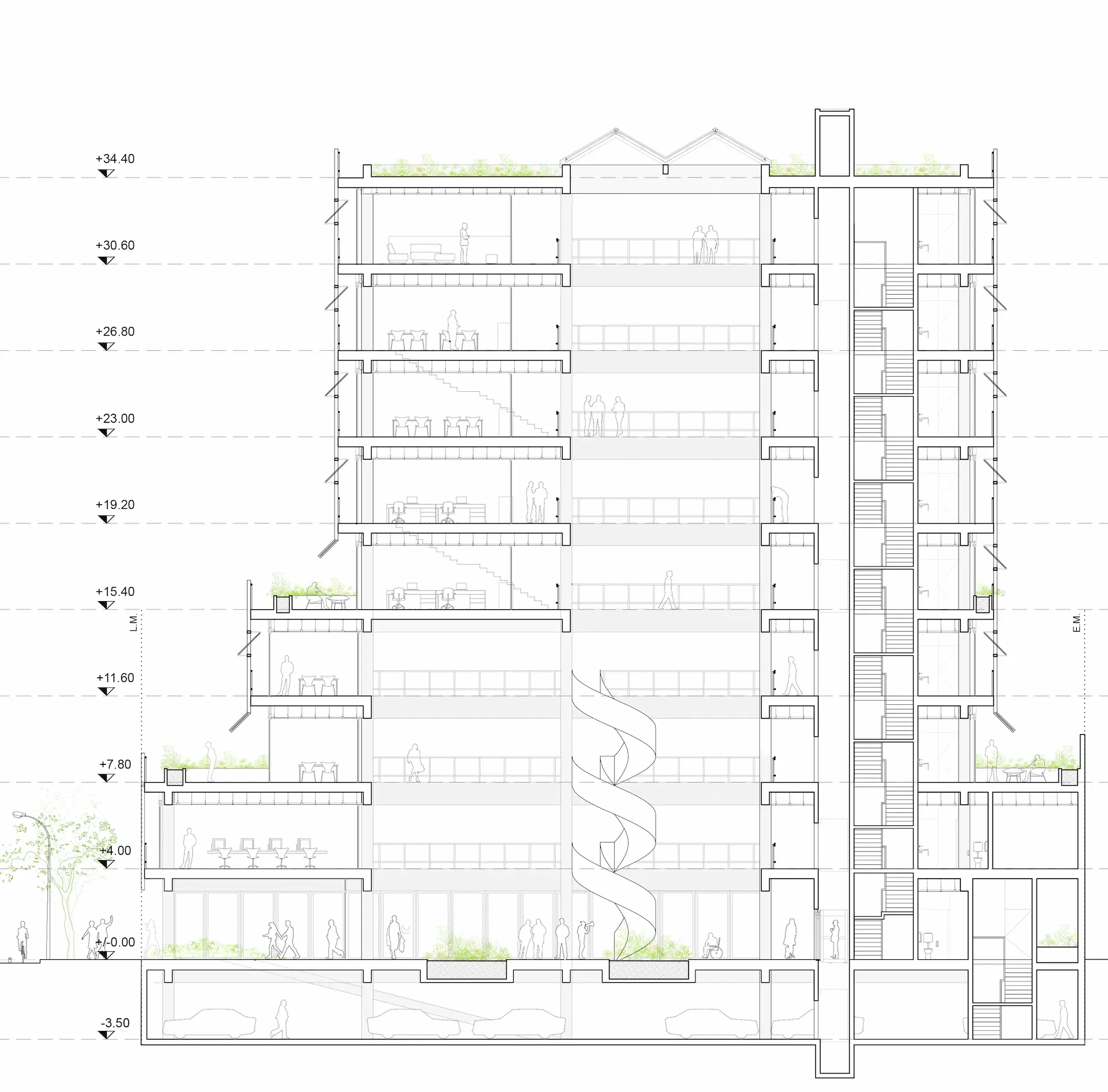
The proposal is formalized through a progressive stepping that mediates between the institutional and neighborhood scales. This gesture allows for the creation of a system of elevated green terraces, which function not only as an expansion of the workspace but also as thermal and acoustic buffers. The heart of the building is a central articulating void—a bioclimatic lung that guarantees deep natural lighting and activates ventilation via the stack effect in summer and thermal accumulation in winter, symbolizing the transparency values of contemporary public management.
The program is organized in a vertical gradient of privacy: a permeable and open ground floor for citizen services, middle levels for technical administration, and an upper stratum for executive functions. Perimeter circulation clears the floor plans, ensuring flexibility and unobstructed views of the surroundings.
In terms of construction, the building utilizes a reinforced concrete structure with deep foundations adapted to local loess soils. The use of suspended cantilevers via tension rods allows for a ground floor free of obstacles. The materiality is completed with passive solar control devices—eaves and tensioned fabrics—ensuring energy efficiency, durability, and low maintenance costs, thus consolidating a responsible, habitable building fully integrated into its community.